The Common Thread: 5 Traits Every High-Achiever Shares (And How You Can Use Them Today)
It is easy to look at the guests on The Relentless Project and think they are cut from a different cloth.
When you hear about an MMA fighter stepping into a cage, or a CEO rebuilding a multi-million dollar empire, or a pilot flying F-16s, it’s natural to think: “That’s amazing for them, but I’m just trying to pay my mortgage. I’m just trying to get through the week.”
But here is the secret: High achievement isn’t a title. It’s a habit.
The people I interview aren’t successful because they have superpowers. They are successful because they apply specific mindsets to their problems. And the good news? You can apply those exact same mindsets to your life, right now, whether you are a parent, a student, an employee, or someone just trying to figure it out.
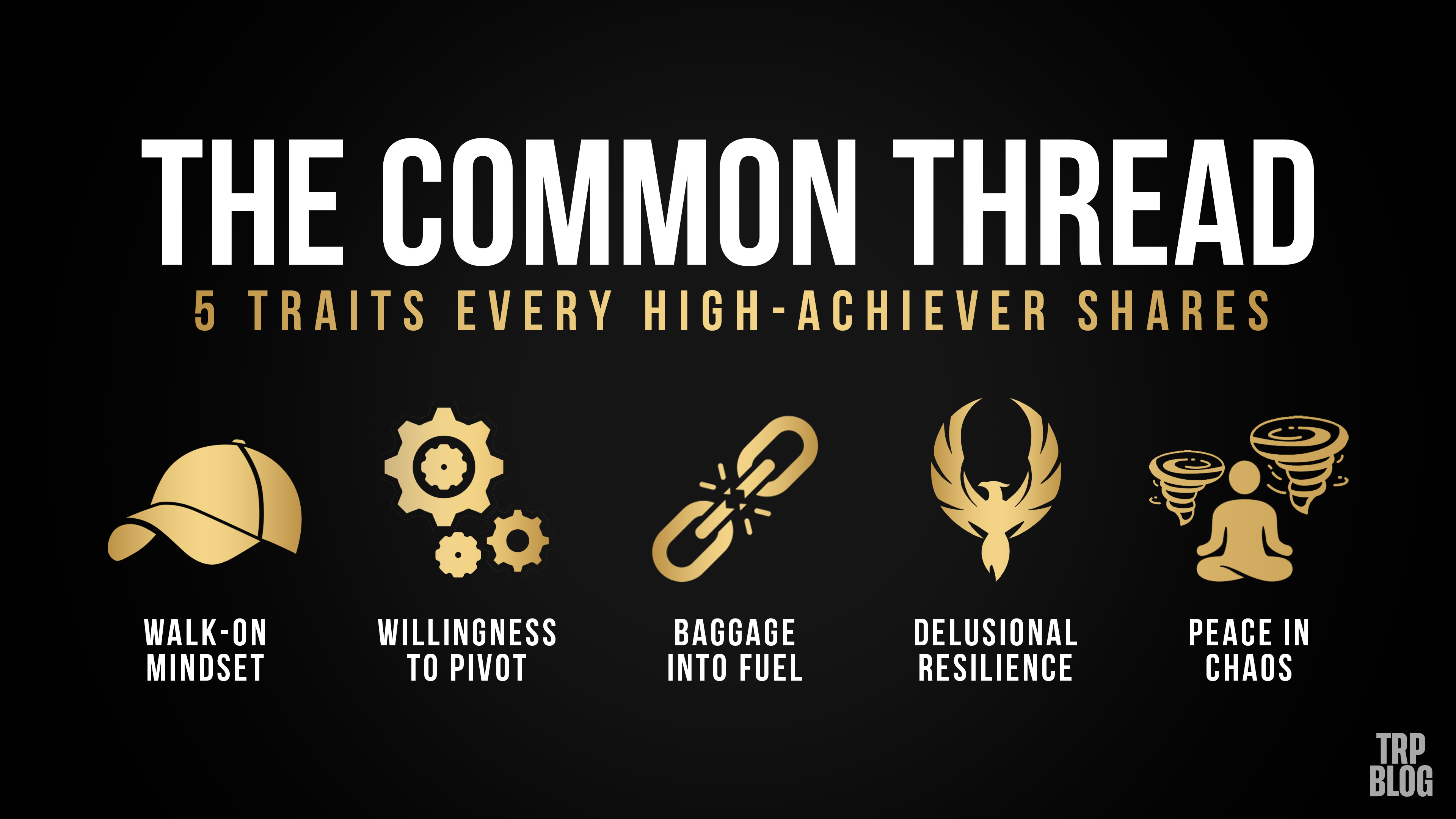
Here are 5 traits our guests share, and how you can use them to level up your everyday life.
1. The "Walk-On" Mindset
Take Jacob Rosnick (Episode #118). He was cut from a D1 baseball roster. That is a dream-killing moment for most athletes. But instead of folding, he took that grit into a courtroom. He applied the "walk-on" mentality—the idea that nothing is given, everything is earned—and launched his own law firm just one year after passing the bar.
Real Life Application: You might not be trying to make a baseball team, but we all face rejection. Maybe you didn't get the promotion. Maybe you didn't get approved for the loan. Maybe you feel overlooked in your family or friend group.
The Lesson: Stop waiting for someone to invite you to the table. If you aren't "picked" for the team, build your own game. High achievers don't wait for permission to be great.
2. The Willingness to Pivot
Chris Prascus (Episode #114) went from loading weapons on F-16s to Hollywood casting calls, to selling meat snacks. "Cowboy Eddy" Parilla went from the violence of the MMA cage to the precision of the finance world. They didn’t let their past define their future.
Real Life Application: How many of us stay in jobs we hate because "it’s what I went to school for"? How many of us stay in toxic relationships because "we’ve been together for years"?
The Lesson: It is never too late to change your story. You are not obligated to be the same person you were five years ago. If your current path makes you miserable, you have the power to pivot. Your skills are transferable; your happiness is mandatory.
3. Converting "Baggage" into Fuel
Erica Amoroso (Episode #119) is a Special Ed teacher and a fierce Jiu-Jitsu competitor. But her fuel comes from a dark place—severe childhood trauma she carried until she was 25. She didn’t let the trauma make her a victim; she used it to build armor and empathy.
Real Life Application: We all have baggage. We all have things in our past that hurt. It’s easy to use that pain as an excuse for why we can’t succeed ("I can't do X because I had a rough childhood").
The Lesson: Your past pain is actually your superpower. It gives you perspective and strength that "lucky" people don't have. Don't hide your scars—use them as proof that you can survive anything.
4. "Delusional" Resilience
Dan Sachkowsky (Episode #116) has rebuilt his business life from zero multiple times. Even after a life-altering heart attack, he refused to stop. To the average person, trying again after losing everything looks crazy. It looks delusional.
Real Life Application: Have you ever hit a point where the bills are piling up, the car broke down, and you just want to curl up in a ball? That is your "Dan moment."
The Lesson: Resilience is just the refusal to accept "no" as the final answer. When life knocks you down, you don't have to bounce back immediately with a smile. You just have to stand up. Just once more. That is what separates the relentless from the rest.
5. Finding Peace in the Chaos
Undefeated fighter Ferdaws "Bobby Murda" Nayimi (Episode #115) talks about the "Art of War." In the middle of a fight, when punches are flying, he has to be the calmest person in the room. If he panics, he loses.
Real Life Application: Your "cage fight" might be a screaming toddler in a grocery store. It might be a boss yelling at you on a Zoom call. It might be the anxiety of looking at your bank account.
The Lesson: Panic is a choice. Breathing is a choice. You can’t always control the chaos around you, but you can control the calm inside you. The person who stays calmest, wins.
The Bottom Line
Being "Relentless" isn't about being famous, rich, or an elite athlete.
It is about waking up in the morning, looking at your real fucking life—with all its messiness, stress, and imperfections—and deciding that you are going to give it everything you have anyway.
You have the potential. The question is, are you brave enough to unleash it?
The Relentless Pursuit: Rejection vs. Redirection